
Vol. 6 — The Posture Blueprint
Posture Is Not a Feeling. It Is an Architecture.

Five issues have built the case.
Vol. 1 asked the question. Vol. 2 returned the evidence. Vol. 3 named the architecture. Vol. 4 measured the execution gap. Vol. 5 proved that running two transformations sequentially is now structurally fatal.
Every issue has ended with the same implicit question from the practitioner reading it: *Fine. But what do I actually do?*
Vol. 6 answers it.
---
**The four words I hear most often from tech leaders:**
*”We’re being careful.”*
I understand the instinct. You are responsible for systems that process $1M+ transactions daily. You cannot afford a production failure. Caution is not incompetence — it is experience.
But I want to be precise about what “being careful” is not.
It is not posture.
Posture is not a feeling of appropriate caution. It is not a team meeting about AI readiness. It is not a vendor evaluation that ends with no decision. It is not a pilot that never reaches production.
**Posture is architecture.** It is four interlocking layers, each of which must be built deliberately, and none of which assembles itself.
---
## The Four Layers
**Governance.** The measurement framework that allows you to evaluate what an agent is doing in your environment. For IBM i organizations, this starts with one question: how do you define correctness for a system that contains forty years of business logic not documented anywhere except the RPG source code?
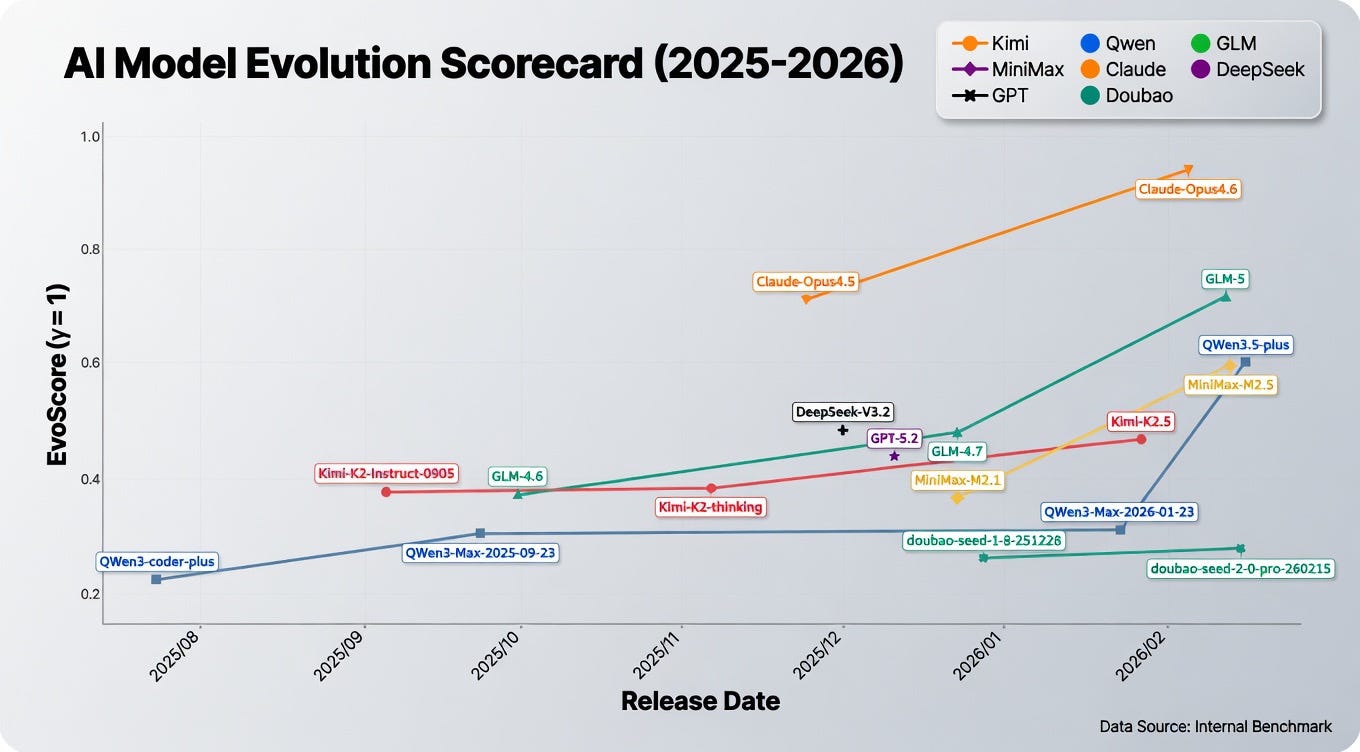
EvoScore is the answer that has emerged from production deployments — correctness measured by business-logic fidelity, not just compilation or test coverage. The governance layer runs before deployment, at every production boundary crossing, and continuously in production. Without it, you are not being careful. You are hoping.
Signal 06 documented this directly: 75%+ of AI-generated code regresses within eight months of production deployment. The organizations that found that out from their own production data were not unlucky. They were ungoverned.
---
**Human capital.** The knowledge transfer problem IBM i organizations have been living for fifteen years is not solved by the arrival of AI agents. It is made more urgent by it.
The senior practitioner who understands the business logic is not replaceable by the agent. They are the person the agent needs to function correctly. The human capital layer is the documented transfer of that knowledge — not to a successor human, but to the agent architecture itself. Business logic documentation. Decision trees. Escalation criteria. The institutional knowledge that has lived in one person’s head for thirty years needs to live somewhere the agent can reach it.
The tandem thesis from Vol. 5 applies here directly. You cannot finish documenting knowledge before you start building agents. The two tracks must run simultaneously.
---
**Deployment infrastructure.** The production boundary question. What can an agent do without human approval? What triggers review? Who owns the agent’s behavior when it fails?
Most organizations running agents today have never explicitly answered these questions. They are operating without a production boundary — which means they are operating without a governance layer.
Signal 13 put the number on it: 77% of organizations have no committed agentic strategy. That is not caution. That is a policy vacuum.
The deployment infrastructure layer is the written answer to those four questions, applied to your specific environment, and reviewed before the first agent touches production code.
---
**Documented frameworks.** The agent charter. The evaluation cadence. The escalation path. The record that allows a different practitioner — or a different agent — to understand what the first one was authorized to do, and how it was performing against that authorization.
Documented frameworks are not bureaucracy. They are the governance architecture that allows the hierarchy to come down safely.
---
## What the Ratio Tells You
Signal 116 named the destination: Jensen Huang’s 100:1 ratio — 75,000 employees managing 7.5 million agents — is not a projection. It is a current operational reality at Nvidia.
At 100:1, you cannot govern at the action level. You cannot review what each agent did. You govern at the policy level: what agents are authorized to do, what they are prohibited from doing, and what triggers human review.
The organizations that build policy-level governance now are positioned differently at 100:1 than the organizations that wait until the ratio forces the conversation.
For IBM i shops, this is the RPG boundary question: what business-logic changes can an agent make autonomously, and what requires the senior practitioner’s review? That boundary is not set by the technology. It is set by whoever builds the governance layer first.
---
## What Dorsey Just Named
Signal 121 arrived on April 2. Jack Dorsey announced the elimination of middle management layers at Block as a transition to an intelligence-based organizational structure.
This is not a cost-cutting exercise dressed as a vision statement. It is the structural answer to the 100:1 ratio problem. Middle management in the old hierarchy served as the human approval chain. Agents remove the need for the approval chain — but only if you have replaced it with a governance architecture that can do the same work at scale.
Organizations that remove the hierarchy without building the governance layer are not becoming leaner. They are creating the governance void.
The posture blueprint for IBM i is the answer applied to your environment: when you remove the human approval chain from your RPG modernization process, what replaces it? EvoScore. Production boundaries. Agent charters. Documented escalation paths. Those are not bureaucracy. They are what makes the transition safe.
---
## The Blueprint
Posture is not a destination you arrive at. It is an architecture you build, layer by layer, before you need it.
The four layers are not sequential. They are tandem — which is what Vol. 5 established. The governance framework informs the deployment infrastructure. The human capital layer informs the governance framework. The documented frameworks hold all three together.
The organizations in Yang’s 1–3 year window that are building governance layers now are not the ones who were least afraid. They are the ones who understood that caution without architecture is not safety.
It is exposure with better intentions.
---
**Vol. 7 — The Decision Window **
Yang said 1–3 years. What IBM i organizations do in the next 90 days matters more than what they do in the next 3 years. The window is open. Seven issues of signals have documented how long it stays that way.
---
*Signal4i is a practitioner-facing publication tracking AI signals that matter for IBM i organizations. Not predictions. Not vendor positioning. Events that have happened, data that has landed, and what they mean for the organizations running the the IBM i enterprise platform.*
*Published by a CTO who has spent 30 years on the platform — and is watching what’s coming.*